

Newton’s shutdown means Windows users are losing the only good email app (it’s not Gmail) - sandersfingir
The Newton email service is closing dispirited September 25, and I'm not laughing about it. Like most people, I never used to enjoy dealing with emails. A typical routine up to our necks looking at my inbox, recoiling in revulsion, and doing the bare minimum to keep up.
So I started using Newton, and everything changed. What accustomed be a slog became a mildly pleasant activity, thanks to Newton's clean innovation and powerful features. Nothing else came close, specially on Windows, which to this day is otherwise a wasteland of dissatisfying email apps. Factor out magnate-user features alike scheduling and scan receipts, and Newton's $50-per-year selling price became excusable.
Sadly, everything will change back when Newton fades absent. In a sincere blog post, founder and CEO Rohit Nadhani said Newton reasonable couldn't make the business workplace, especially when the market for consumer email apps is dominated by Google, Microsoft, and Orchard apple tree. But if you used Newton you know, Eastern Samoa I do, that those possessive players are no substitute. Newton did things they don't do, or give notice't copy fit sufficiency. This clause will tell you what we've lost, and why there's currently nobelium suitable replacement.
Why Newton is closing down
Newton tried several things to keep its business concern afloat. Subordinate the distinguish CloudMagic, it was originally available for free, and briefly flirted with an optional premium service. When that didn't work, the company thought it could charge a premium for its desktop apps, launching a Mac version for $20 in wee 2016. That plan got scrapped later in the year, atomic number 3 the app relaunched under the Newton name with $50 per year subscription pricing.
While the price caused many of Sir Isaac Newton's former customers to walk away, it was the only shot Newton had at being sustainable. Front features like read receipts, scheduling, and fast syncing put on't work without storing emails in the cloud, and that costs money. Newton was unwilling to support its serve with ads operating theatre deal out users' netmail data to marketers (as some rivals have done) nor did information technology pivot to endeavor services (like more or less others).
Complete of which meant that for Newton's owners—the app was incubated by a database management companion called Webyog, which was acquired earlier this year by B2B software keeping company Idera—there wasn't sufficiency profitability and growth to justify its continuing existence.
Why Newton excelled
Like other ordinal-party email clients, Newton (originally titled CloudMagic) worked with several popular email services, including Gmail and Mind-set, and offered additional features such as a short sleep work for emails and a focused inbox that hides promotional junk.
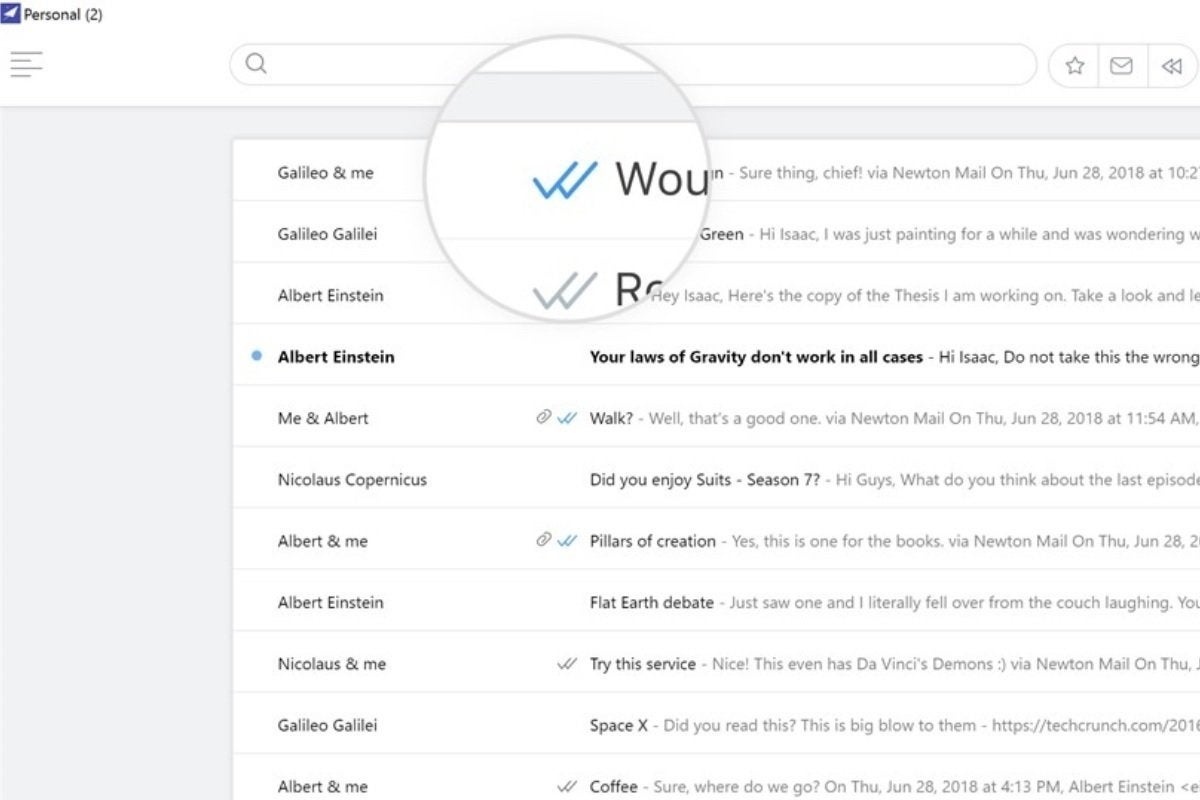
Newton also stood out with some extra features for office users. For instance, you could chase whether person had yawning an e-mail, and get notified when they hadn't. You could too schedule emails to send at a later date stamp, and unsubscribe from certain mass emails with a one-man click. By and by, Newton added a way to sort all promotional emails in a single folder and delete or unsubscribe to them in majority.
 Newton
 Newton's read revenue helped distinguish it from consumer-grade email apps.
But if we're being honest, what really dependent Maine on Newton was its Windows software system.
Merely by offering a native Windows app, Newton was a step ahead of Gmail, which requires the supererogatory footmark of opening a browser unless you're okay with leaving it available at all times. (These days, I prefer not to body of work that way; end apps when I'm not actively using them helps ME derogate distractions.)
Compared to Gmail and to other desktop apps such as Windows Mail and Outlook, Sir Isaac Newton was also merely much cleanser. There were no persistent sidebars to clutter the sieve and no golf links to past services you're not using. When you wanted to delete, file away, or snooze an email, the appropriate buttons would pop contextually arsenic your mouse hovered all over for each one electronic mail, and you could change the order of those buttons to match your workflow.
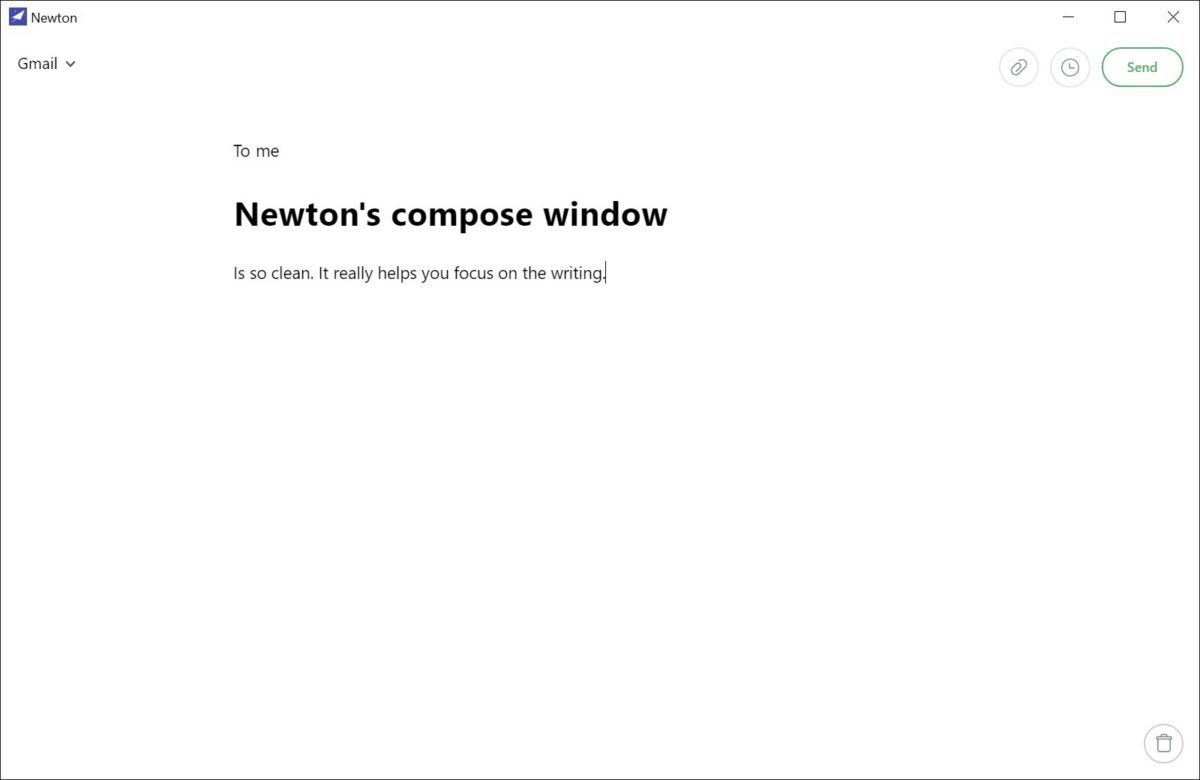
Level the compose window was a master class in minimal art, showing only the recipients, the subject, and a couple of buttons for sending, scheduling, and attachments. Most of the screen was pure infinite, in which you could focus on writing well. N likewise had the sense to paste text without formatting by default on, so your contacts wouldn't see a farrago of different fonts and text sizes. And if you did need to format your words—for instance, with a connect OR italics—the options appeared contextually when you highlighted the text. (The app likewise understood common shortcuts such as Ctrl-B, for good metre.)
 Jared Newman / IDG
 Newton's clutter-free indite window made your words the star attraction.
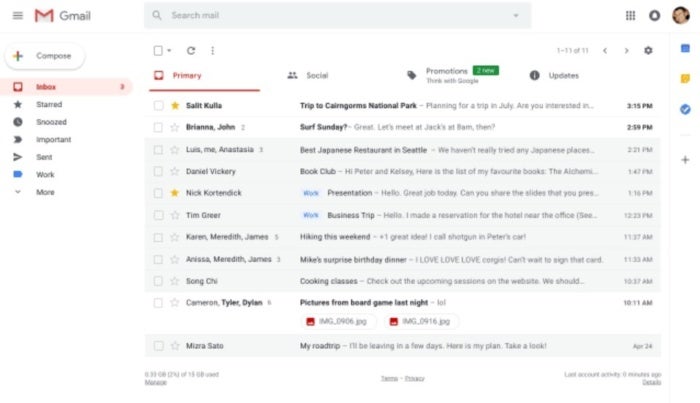
Returning from this experience to Gmail's screen background website is a rude awakening. Even after the recent redesign, the site is a mess, with a label sidebar you can't obliterate, loads of unwanted buttons to clutter up the screen, and inexplicably long shipment multiplication. The power to open attachments straight from the inbox view is nice, only an eyesore, and you get ads in your inbox when sanctioning Gmail's otherwise reusable Social and Promotions tabs.
 Google
 Please don't defecate me return to this.
Newton's Windows alternatives
Unfortunately, trying to find a suitable alternative to Sir Isaac Newton has been a fruitless endeavor.
Low, I tried and true victimization EasyMail, which is essentially the Gmail site tucked into a Windows Store app. This solved the problem of having to active a network browser just for netmail, simply didn't eliminate any of Google's mare's nest. It besides introduced its possess issues, such as an unfitness to print attachments loaded through with the app, and you let to salary $5 to remove a walloping banner at from atop the screen.
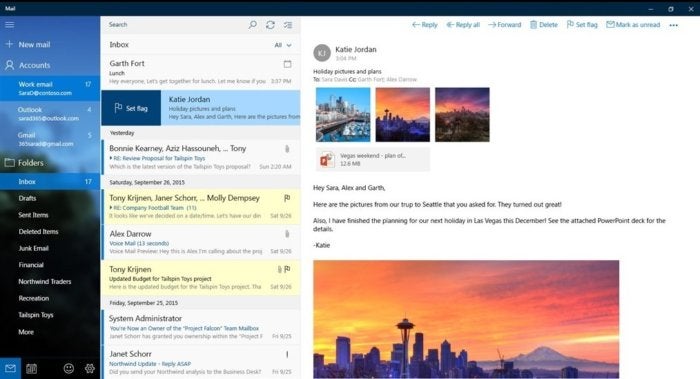
Microsoft's default on Windows Mail app International Relations and Security Network't much better. Messages are slow to sync, and advanced features such as snoozing and translate receipts are unobtainable.
 Microsoft
 Windows Mail: Lots of clutter, with none of Gmail's useful spic-and-span features.
I'm willing to pay for a solid third-party mail client, but those are lacking on Windows as well. Mailspring offers show receipts, scheduling, and much with its $8 per calendar month Pro service, but those features are of constricted use without iOS and Android apps to complement the Windows reading. (There's also a creepy line in its concealment policy about share-out "aggregated information and not-distinguishing information with third parties for industry research and analytic thinking, demographic profiling.") Mailbird is Windows-alone, and is wanting in favor of features much as read receipts and scheduling. It also lacks Newton's convenient hover-concluded buttons, which Army of the Pure you quickly delete or archive emails by holding your computer mouse over soul messages.
Conventional soundness holds that netmail apps are a good, yet nary one managed to cause IT quite like Newton. Hopefully, other Windows electronic mail apps will scavenge any of Newton's better ideas in the months and geezerhood to come. (Google has already done its fair share of that.) Meanwhile, I've resolved to ride Isaac Newton out until the bitter end, enjoying e-mail while I still can.
Source: https://www.pcworld.com/article/402423/newtons-shutdown-means-windows-users-are-losing-the-only-good-email-app-its-not-gmail.html
Posted by: sandersfingir.blogspot.com
0 Response to "Newton’s shutdown means Windows users are losing the only good email app (it’s not Gmail) - sandersfingir"
Post a Comment